

Recipe Cards Are Analog
Lately my friends and I have been looking for ways to bring more analog moments into our routines. Film photography, physical books, handwritten planners, VHS collections, it's all having a moment. There are already so many great pieces on why and how analog is trending (my friend Yazzy wrote a great piece on it) so I’m not gonna break that all down here.
Today I wanna talk about one thing I haven't seen much of in this analog resurgence, recipe cards!!
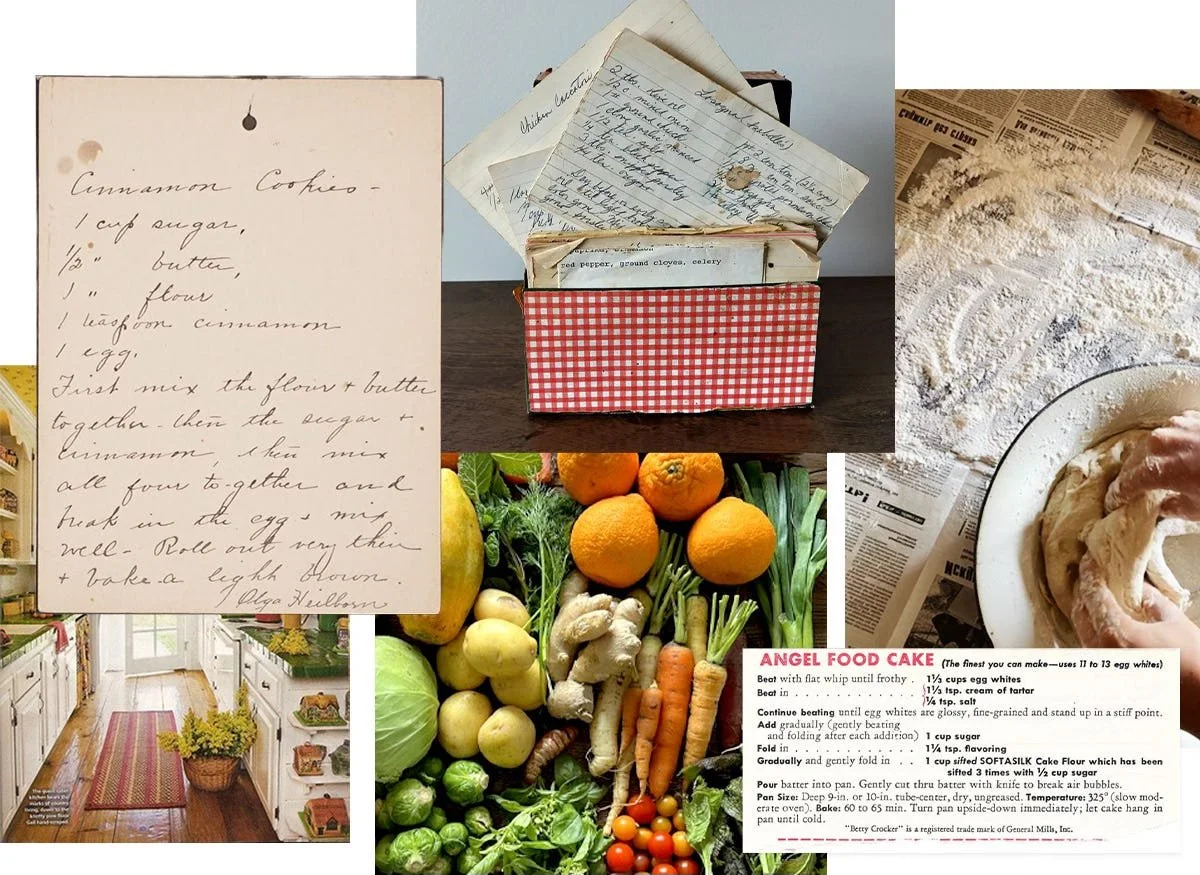
What happened to recipe cards?
Like many things they got replaced by the internet. It makes sense, as the internet offers millions of searchable, filterable, reviewable recipes at your fingertips. And that’s all great until you’re mid-cooking with messy hands trying to scroll past a six-paragraph essay about someone’s trip to Tuscany to get to the part where they tell you what pasta to use.
Not only is it annoying to work with, cooking from a phone means cooking in competition with every other recipe that’s ever existed. It’s information overload and the abundance of options can be paralyzing.
A Brief History of the Recipe Card
In the 1600s, families kept handwritten manuscript books, sometimes called ‘receipt books,’ that mixed recipes with herbal remedies, household tips, and the occasional bit of gossip. Women were largely responsible for keeping these, passing them down to their children and family members.
The recipe card emerged alongside modern household science in the late 19th century, when cooking shifted toward standardized recipes with precise measurements that could give you repeatable results. By the mid-20th century it had become a household staple. Companies like Betty Crocker and Campell’s Soup printed them as promotional giveaways, stores sold decorative card boxes, and most women had a collection in their kitchen.
Recipe cards were a way women shared their creativity and created community before anyone had a platform to do so.
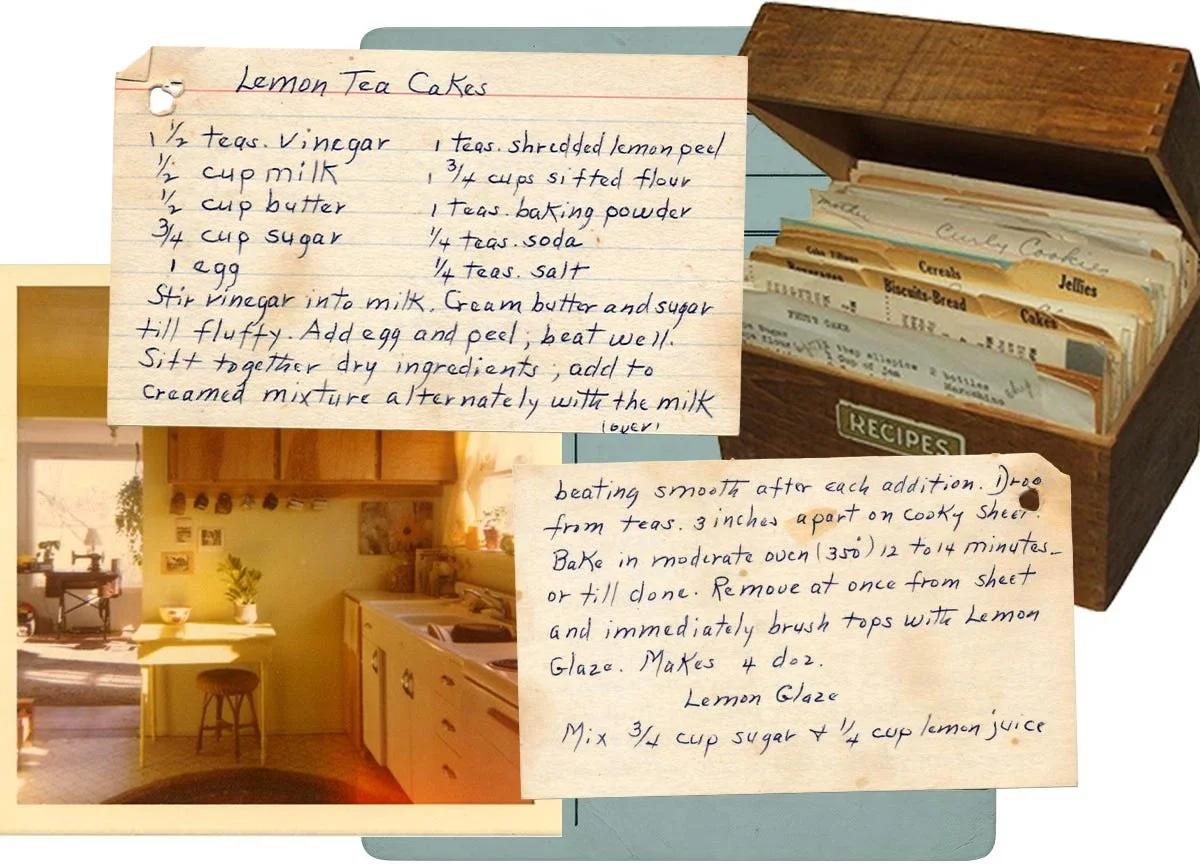
Why use a recipe card?
Its cute!!! and cooking from a recipe card is simple, it keeps you present.
I am not saying you should abandon online recipes all together, some of my favorite recipes came from food bloggers like Wishbone Kitchen and Half Baked Harvest. But if you find yourself making the same recipe a few times, I think it's a good idea to write it down!
I have written down all my go to recipes, and it makes it easy to go back when I want to make something again or share it. A collection recipe cards is already curated to your taste and can be great for when you are stuck on what to make.
The cards themseleves get better the more they are used. Every grease stain, note in the margin, crossed-out ingredient is a record of all the times the dish was made. I love the idea of these cards becoming little artifacts of wear and use. When you cook from a handwritten card, you’re cooking with personal history.
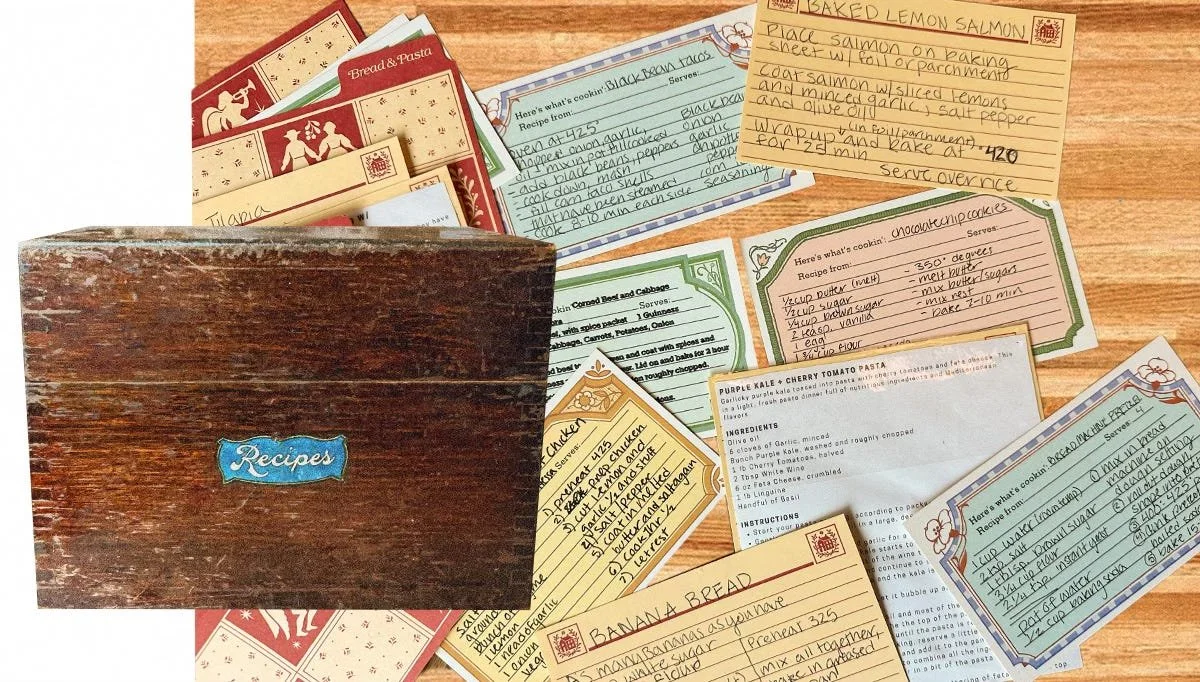
How to get back into it
It doesn’t take much. Here’s where to start:
Write down what you already make. Your weeknight pasta, favorite vinaigrette, go-to roast chicken. These recipes and deserve to be on paper.
Ask people for theirs. Request them handwritten if you can. The handwriting is part of it. If someone’s already passed, look through their papers, recipe cards turn up in the most unexpected places.
Get a good recipe box. These are easy to thrift!! There are beautiful wooden ones, vintage tin ones, so many options. Make it something you want to keep on the counter. There are so many on Etsy!
Don’t make it precious. The goal isn't to have beautiful cards. The goal is to have used ones. Write messily. Let things get splattered. Add notes in the margins. That's the whole point.

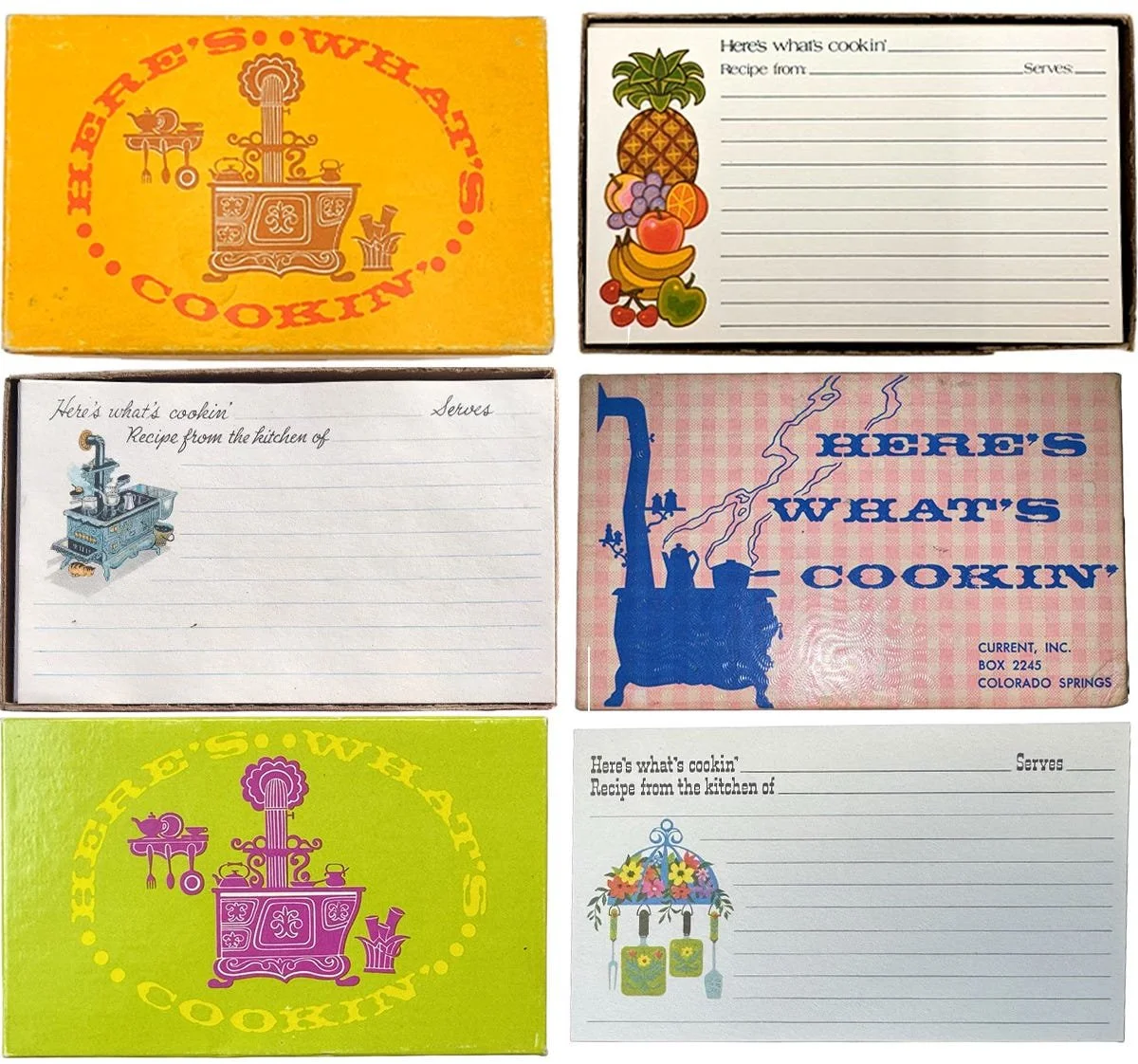
Here’s What’s Cookin Recipe Cards
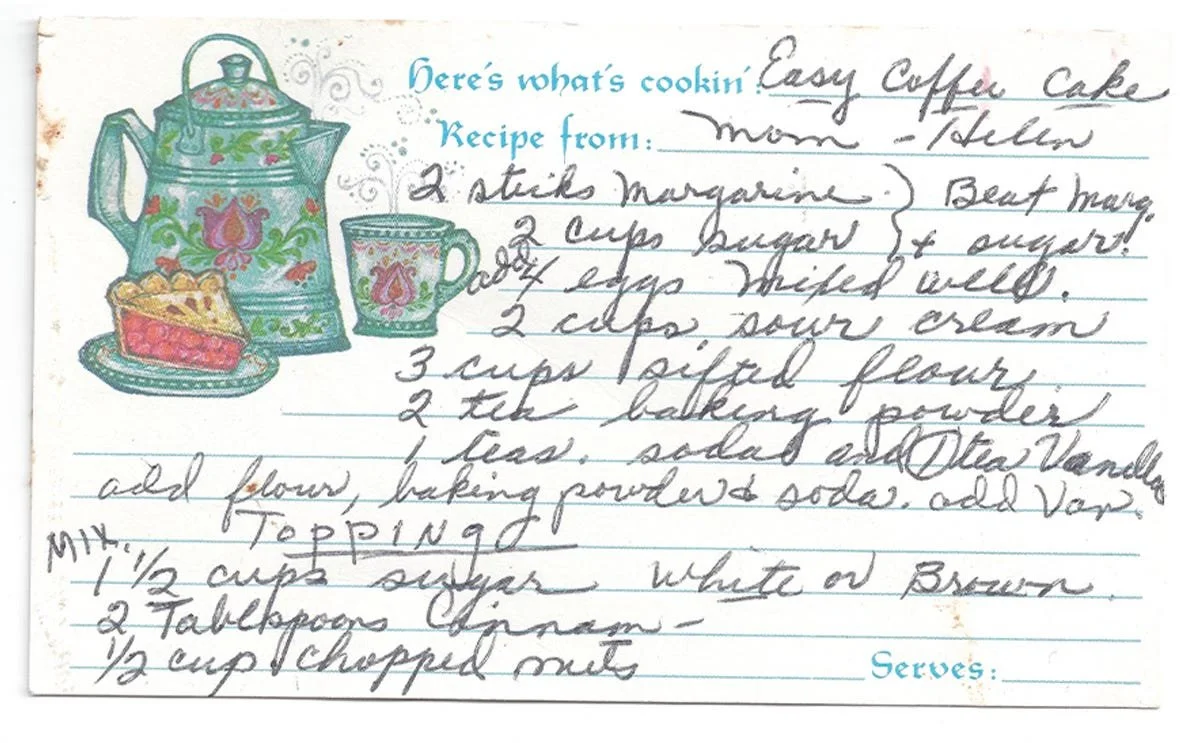
The vintage Here's What's Cookin' recipe card collections are my favorite to buy secondhand. The cards are 5x3 inches of warm, retro-rooster charm, printed with prompts like "Serves" and "Recipe from the kitchen of".
You can still find them on eBay, Etsy, and in thrift stores, often inside their original box.

Family Recipes
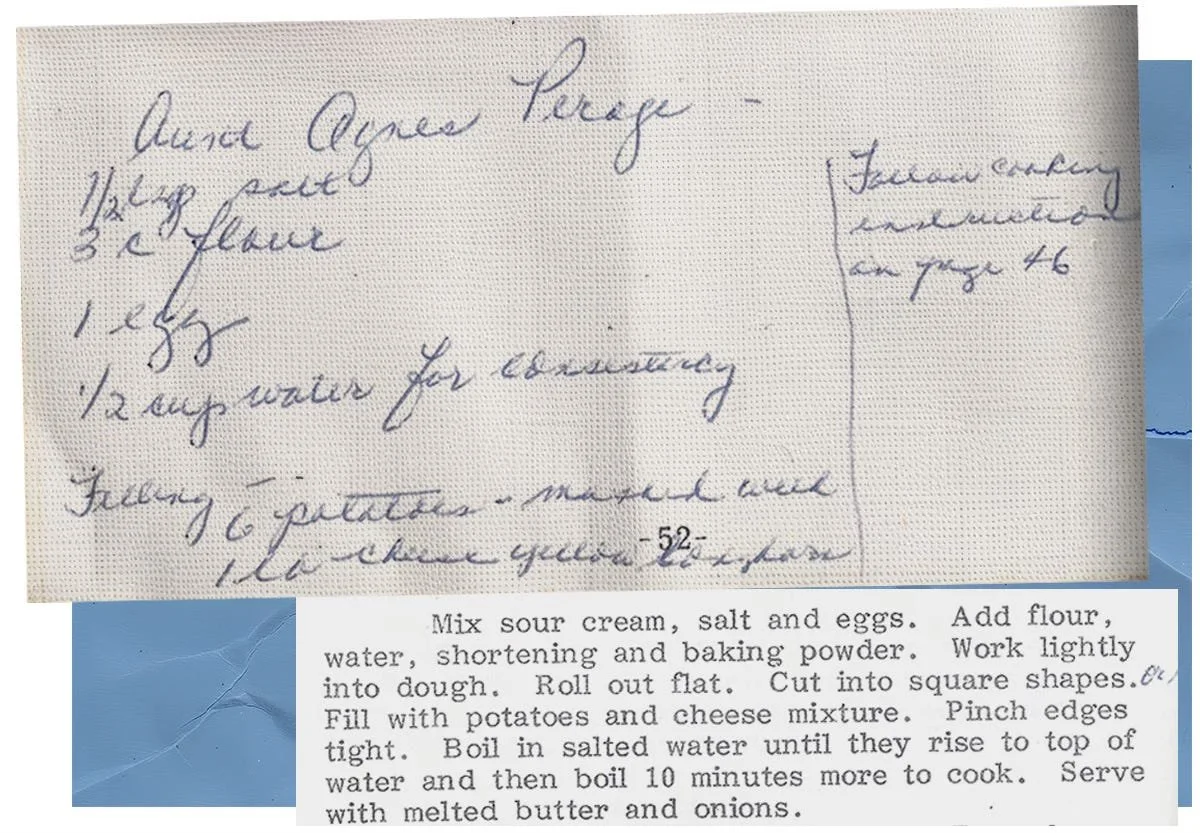
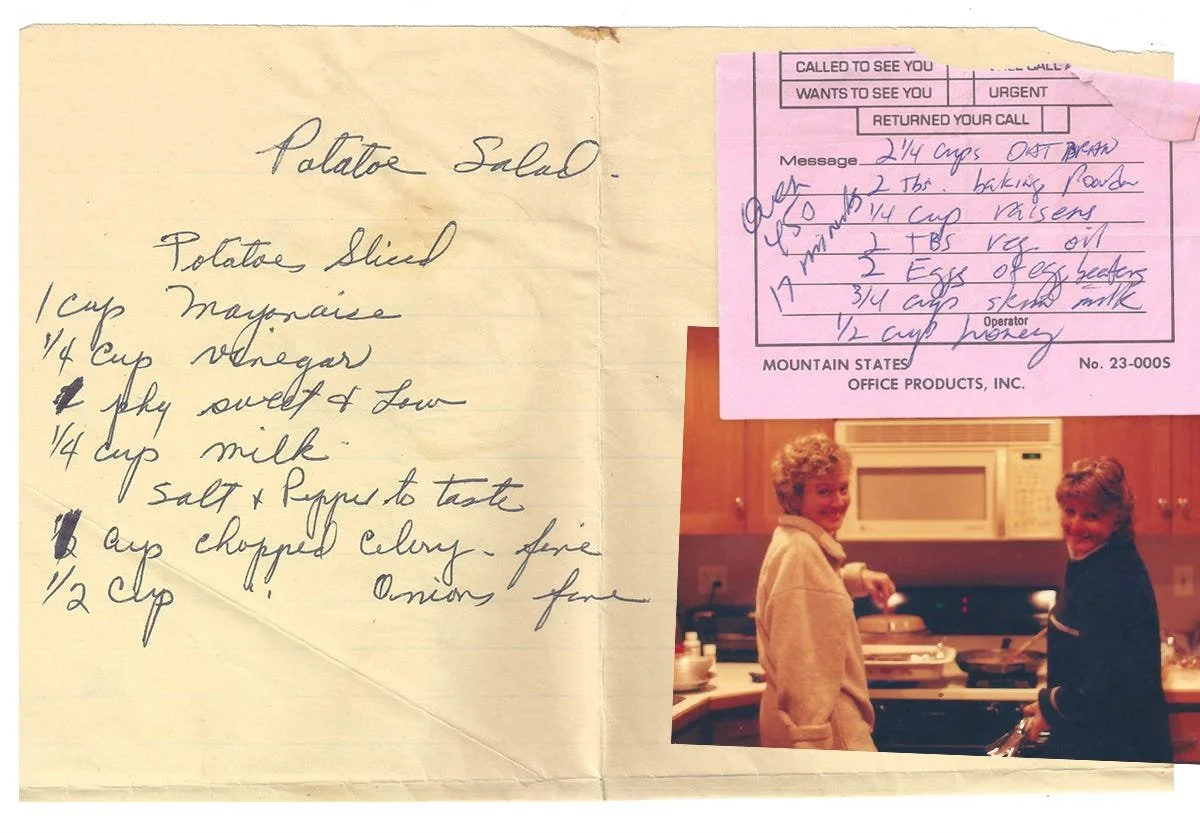
On a more personal note, I’ve been sitting on a small stack of recipes that belonged to my great grandma Helen. She worked as a professional chef at a large bank in New York at a time when women didn’t hold roles like that. I never met her, but I’ve heard she was exceptional and I’m lucky enough to have inherited some of her family recipes. There’s something really sweet about cooking from a recipe passed down through generations.

“People who love to eat are always the best people” - Julia Child

